
Choose where the music starts and ends
Listen for an entrance that makes sense without a long lead-in. A chorus may work better than the first seconds of a track, but it still needs a clear starting point. Mark a possible ending after a completed line or phrase. Cutting through a held note or the final syllable can make an otherwise useful excerpt feel unfinished.
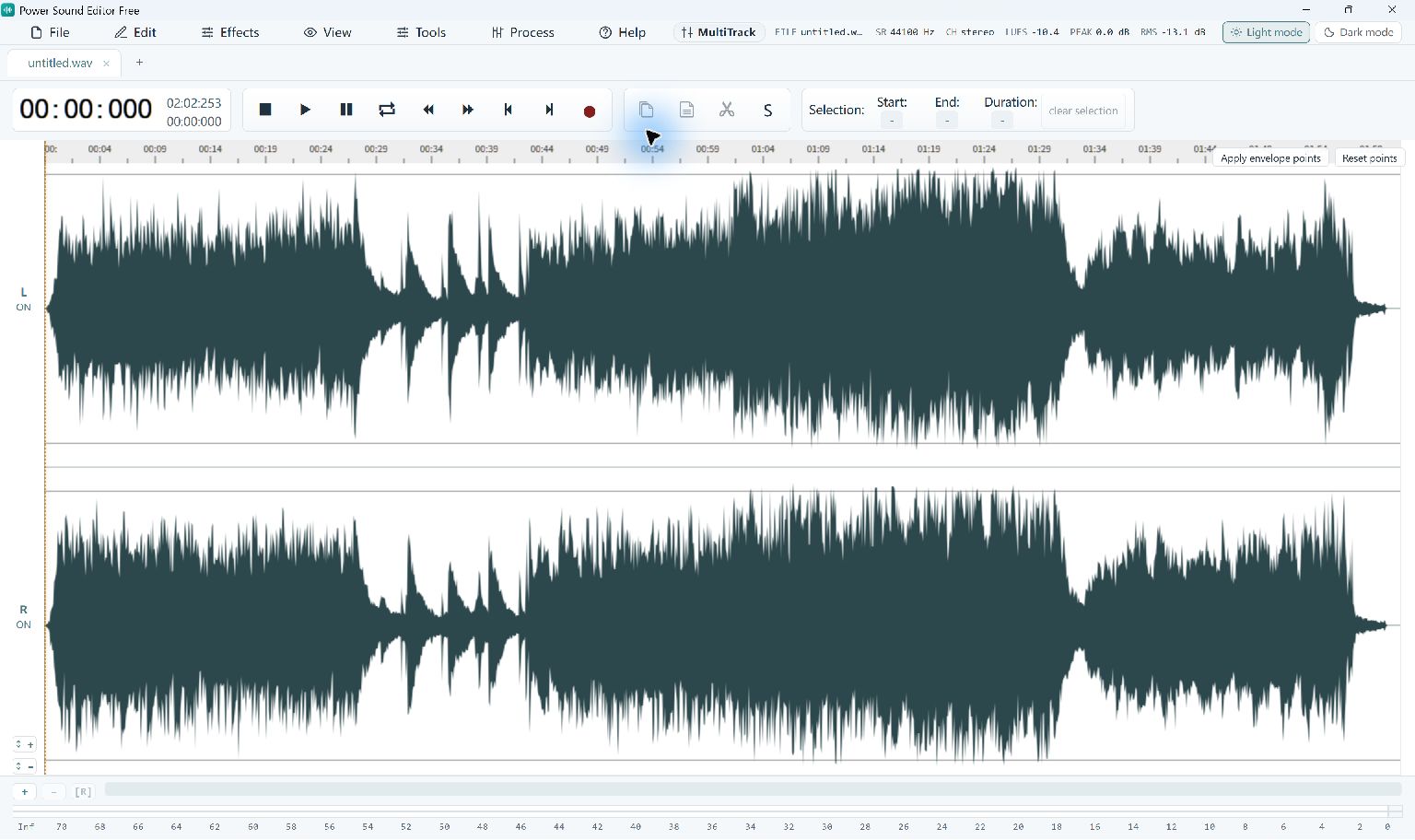
Audition the selected passage on its own, then replay the start and end several times. The waveform helps locate a loud hit or a quiet gap, but it cannot tell you whether the rhythm feels natural. Move the boundary when the musical result calls for it.
Check the volume on your speakers
Use a short fade where an edge sounds abrupt. Avoid pushing the level until loud passages distort, especially when the source is already heavily processed. A clip that sounds powerful through headphones may behave differently through a small speaker. Export one test file and listen on the planned playback setup before preparing more material.
Step-By-Step Instructions
- 1
Select part of the song
Open the track and find the section you want to share. Choose a start and finish that preserve the phrase rather than following an arbitrary duration.
- 2
Save the selected audio
Use Export Selection to save the chosen region as a separate WAV working copy. Open that shorter file for the final boundary adjustments.
- 3
Add fades
Apply Fade In or Fade Out only where it improves the entrance or exit. Play the entire clip and check for distracting jumps in volume.
- 4
Export and test playback
Export the format accepted by the destination player. Give the file a recognizable name, transfer it and test playback before the event.
Common Questions
Does this create a continuously beat-matched DJ set?
This workflow prepares an edited audio excerpt. It does not promise automatic DJ beat matching or a live performance system.
Which output should I choose?
Use a format your playback device accepts. MP3 is a practical option for many players; confirm the device’s requirements and test your file.