
Choose an audio format
A spoken interview for a phone, music for an editing project and a long meeting archive have different requirements. MP3 is convenient for everyday playback. WAV is useful when another editor expects uncompressed audio. FLAC keeps decoded audio without an additional lossy compression step, although it cannot restore detail already missing from the recording.
Choose a tool that lets you inspect the input, select an audio output and choose where the new file goes. A long preset list is less valuable than being able to repeat the same conversion reliably.
Convert local videos in a batch
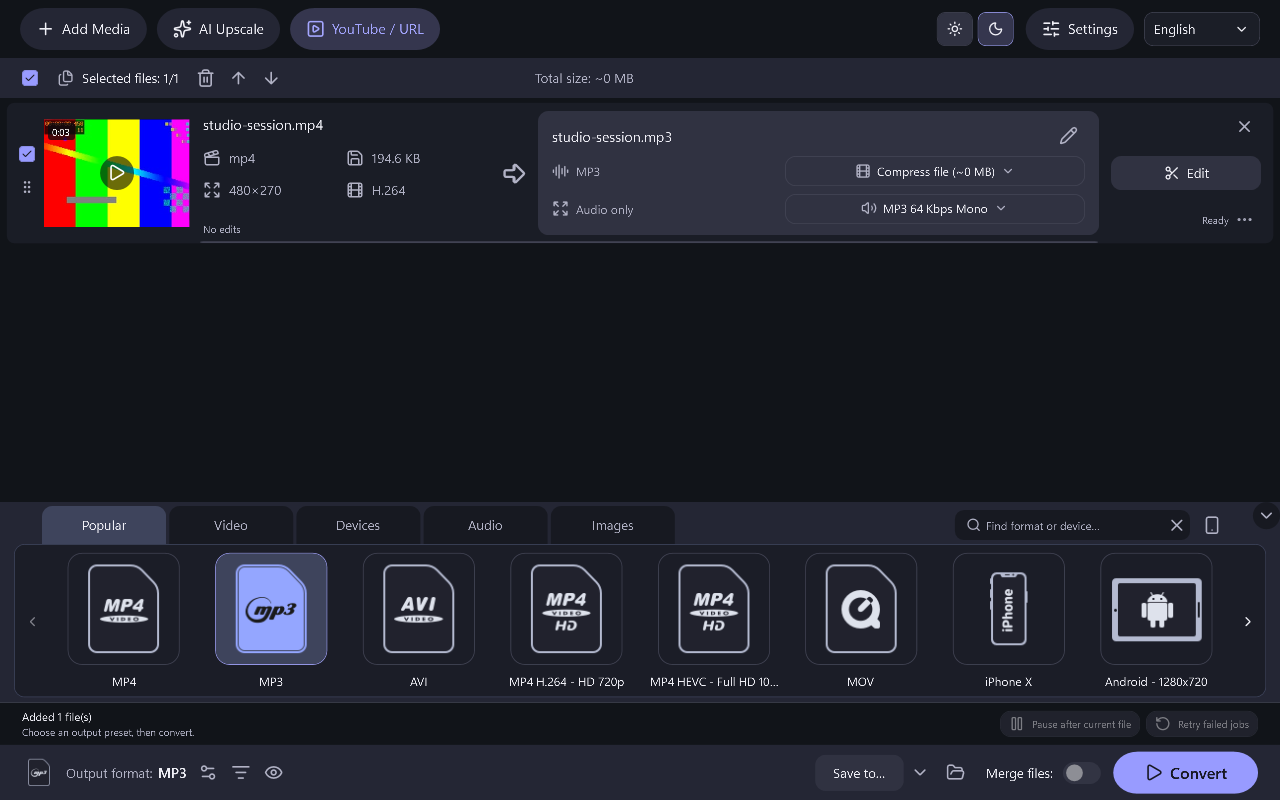
Power Audio Extractor accepts local video files, offers dedicated audio presets and keeps multiple items in a conversion queue. Its bundled media engine performs local file conversion on your computer. You can start with one short sample before adding an entire folder.
Every software feature is free. Keep the original video until you have listened to the exported file, checked its duration and confirmed that the correct soundtrack was selected.
Step-By-Step Instructions
- 1
Test a short video
Pick a recording containing ordinary speech, a quiet passage and a louder moment. A silent or unusually short sample can hide problems that matter in the full recording.
- 2
Compare MP3 with WAV or FLAC
Export MP3 for listening and WAV or FLAC for further editing. Compare playback, file size and compatibility in the program that will receive the audio.
- 3
Convert the remaining files
Once the format and destination work, use the same choices for the rest of the queue. Give outputs meaningful names so they are easy to identify later.
Common Questions
Is a larger audio file always better?
No. Increasing bitrate or using WAV does not reconstruct sound removed by an earlier compressed source.
Do I need an online conversion account?
Local video-to-audio conversion runs in the Windows application and does not require an online conversion account.